FRENCH LESSONS
THE BEAUTIFUL VILLAGES

Since we began our travels in September, I’ve taken to occasional lurking on Reddit, where there is much discussion about the history, culture, expat life, and language of France, as well as travel suggestions. Just as we returned to Montblanc for our final few weeks, I read a post from someone who had been watching a lot of French travel videos and asked, “Do people really live in those old medieval villages?” Was social media hyping up the fairy-tale aspect of these little beauties that dot the countryside everywhere in France?
It’s a good question and one we wouldn’t have been able to answer ourselves prior to our trip. The answer is yes. For sure there are people living in many of the old villages, preserving and updating the homes, commuting to jobs, grabbing baguettes from the local bakery and sending their kids to school just like everywhere else. In some places, tourism is the core of the local economy; in other places, the village is home to a dynamic community of people with public services, activities, healthcare facilities and everything else one might expect in a thriving town, perhaps with few tourists. There are some villages, of course, that are not thriving. We liked them all.
When I asked our French friend in Lyon which village she loves the most, her response was indicative of how difficult it is to choose among so many gems:
Eze, Collonges-la-Rouge, Conques, Sauveterre-de-Rouergue, Rochefort-en-Terre but again so many villages in Alsace are precious.
Other names are quickly coming to my mind, of course Rocamadour, Les Baux, Yvoire, Pont-Aven, Ramatuelle, Moustiers-Sainte-Marie, Salers, Najac, La Roque-Gageac
Oh, and Banon.
Oh dear. We’ve seen only just a few of these. Return trip necessary.
We fell in love with our village of Montblanc, but along the way we saw many others, some by chance and others by choice. Each was unique, each special. During our final few weeks in France, we continued to wander the nearby villages and found one in particular that will ultimately be added to our own list of favorites.
We were drawn to Saint-Guilhem-le-Désert immediately, 50 minutes north of the Mediterranean and south of a national park. Founded in 804 AD, it is part of the Camino de Santiago pilgrimage route. With only 250 full-time residents, it was sleepy when we visited in late November. But the high cliffs and river rushing through town apparently bring thousands of outdoor enthusiasts - hikers, climbers, cyclists, and boaters - during more temperate times of year. Trailheads everywhere!
Restaurants, hotels and shops, most closed now for the season, line the crooked streets. The place is beautifully maintained; homes and buildings updated with all the modern conveniences. As you can see, the photographer found plenty to admire.
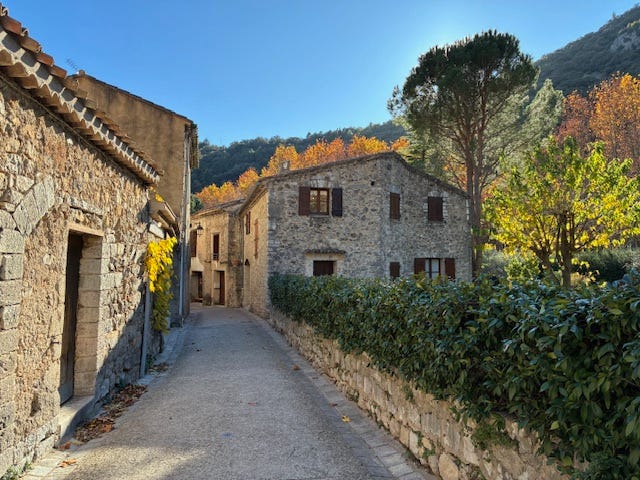
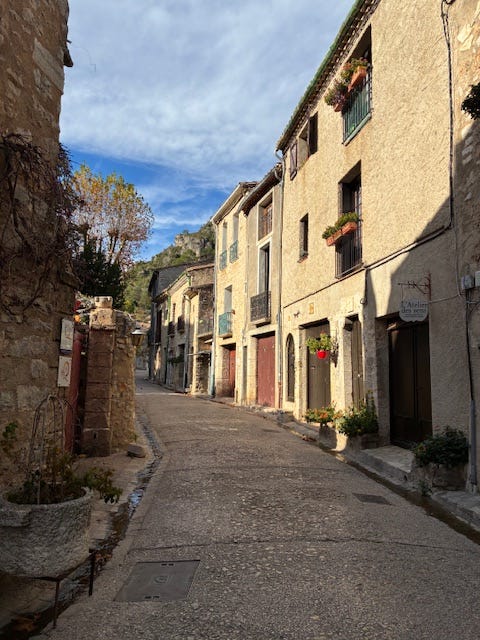
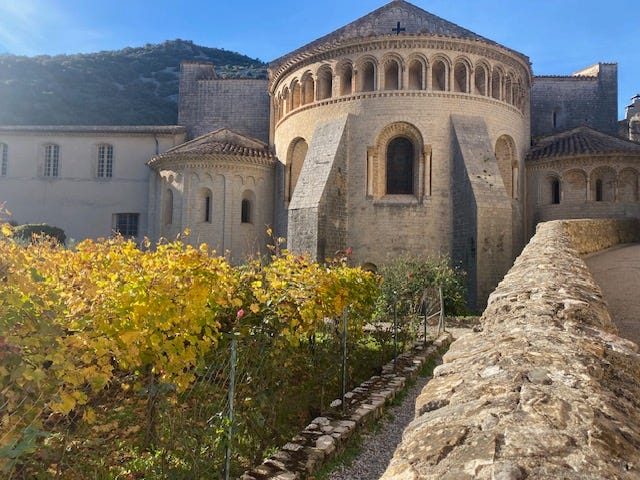
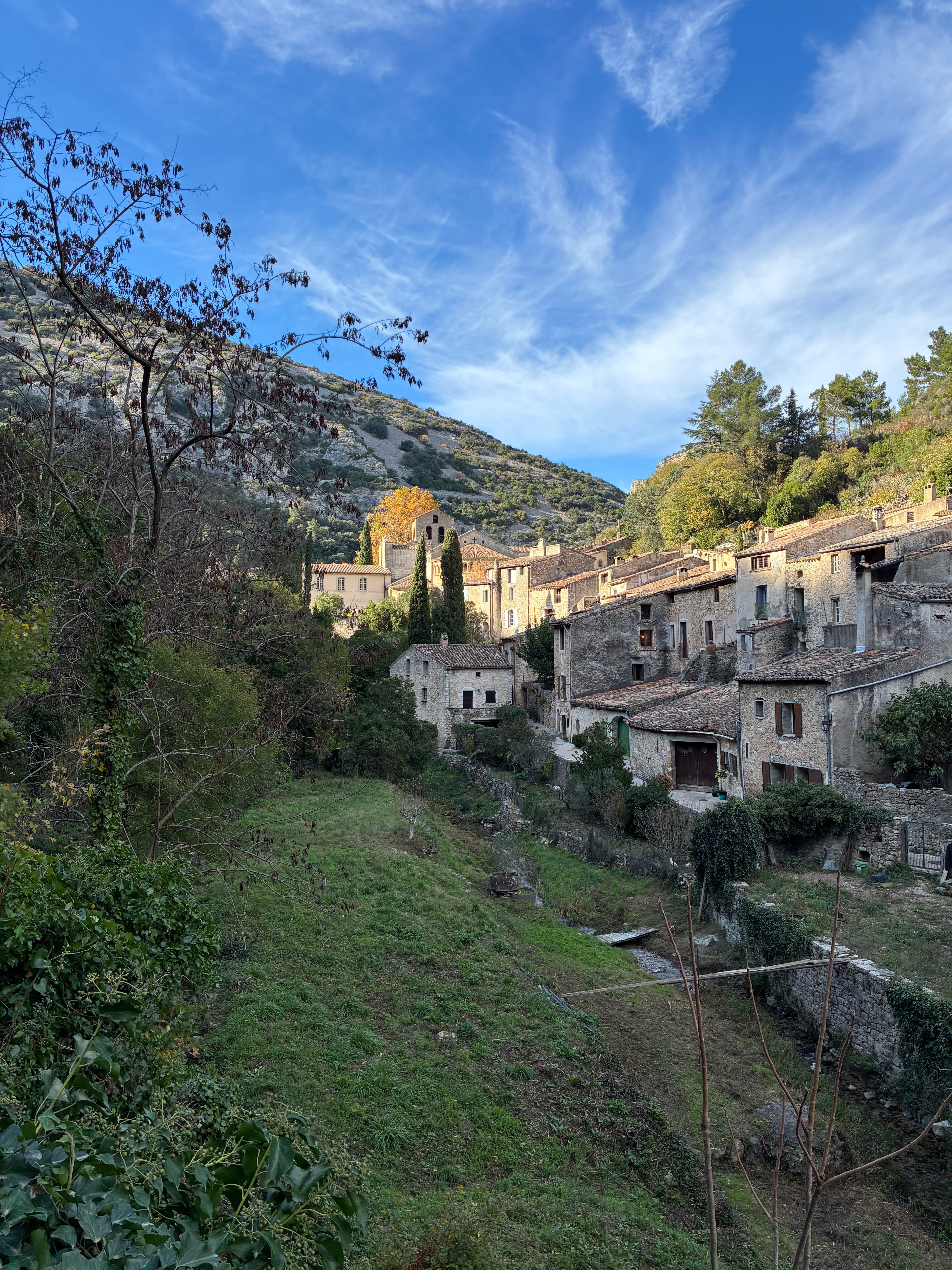
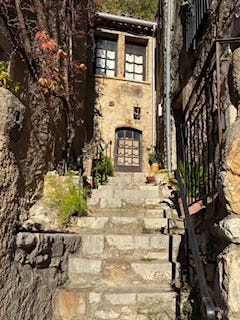
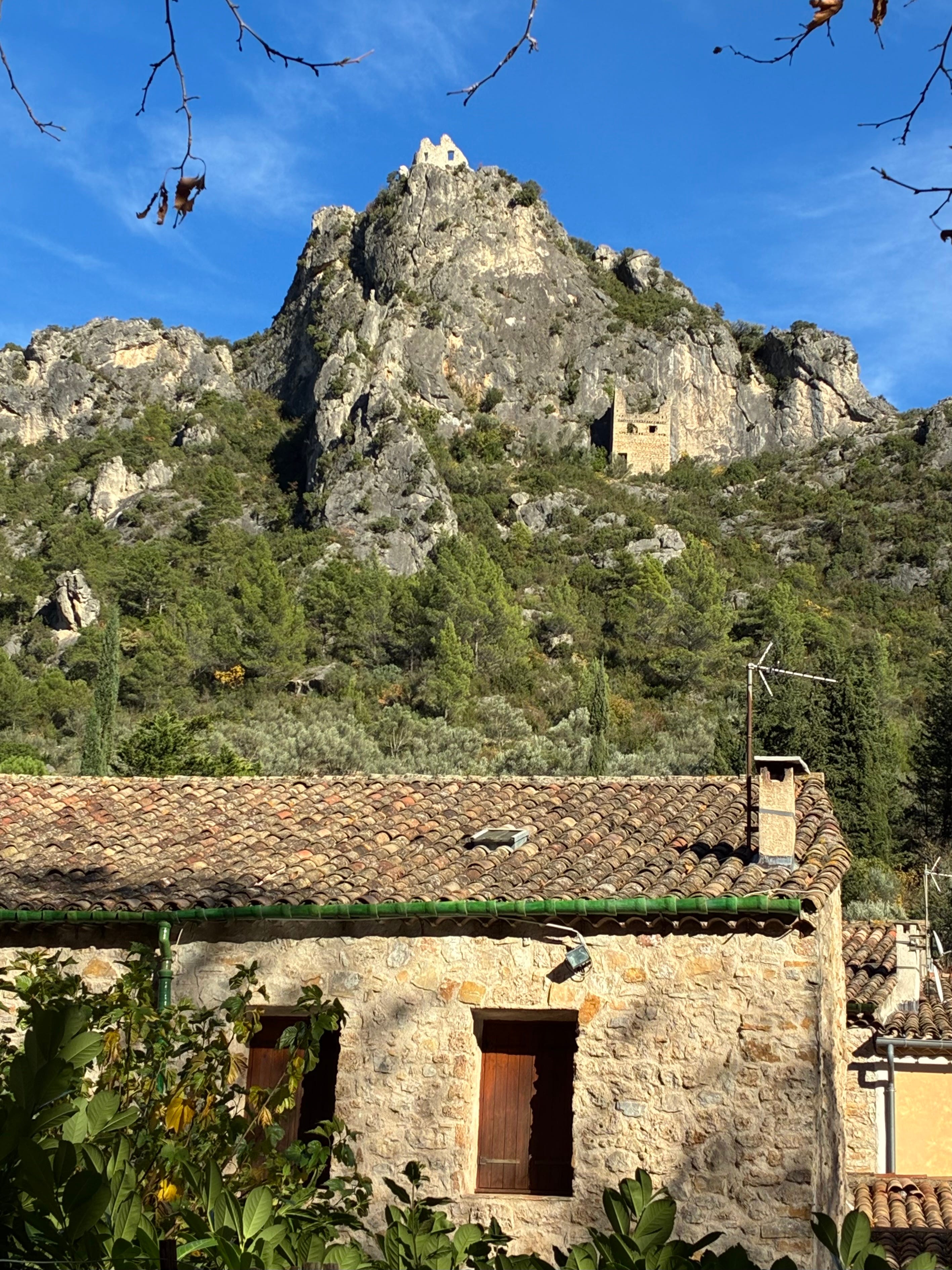
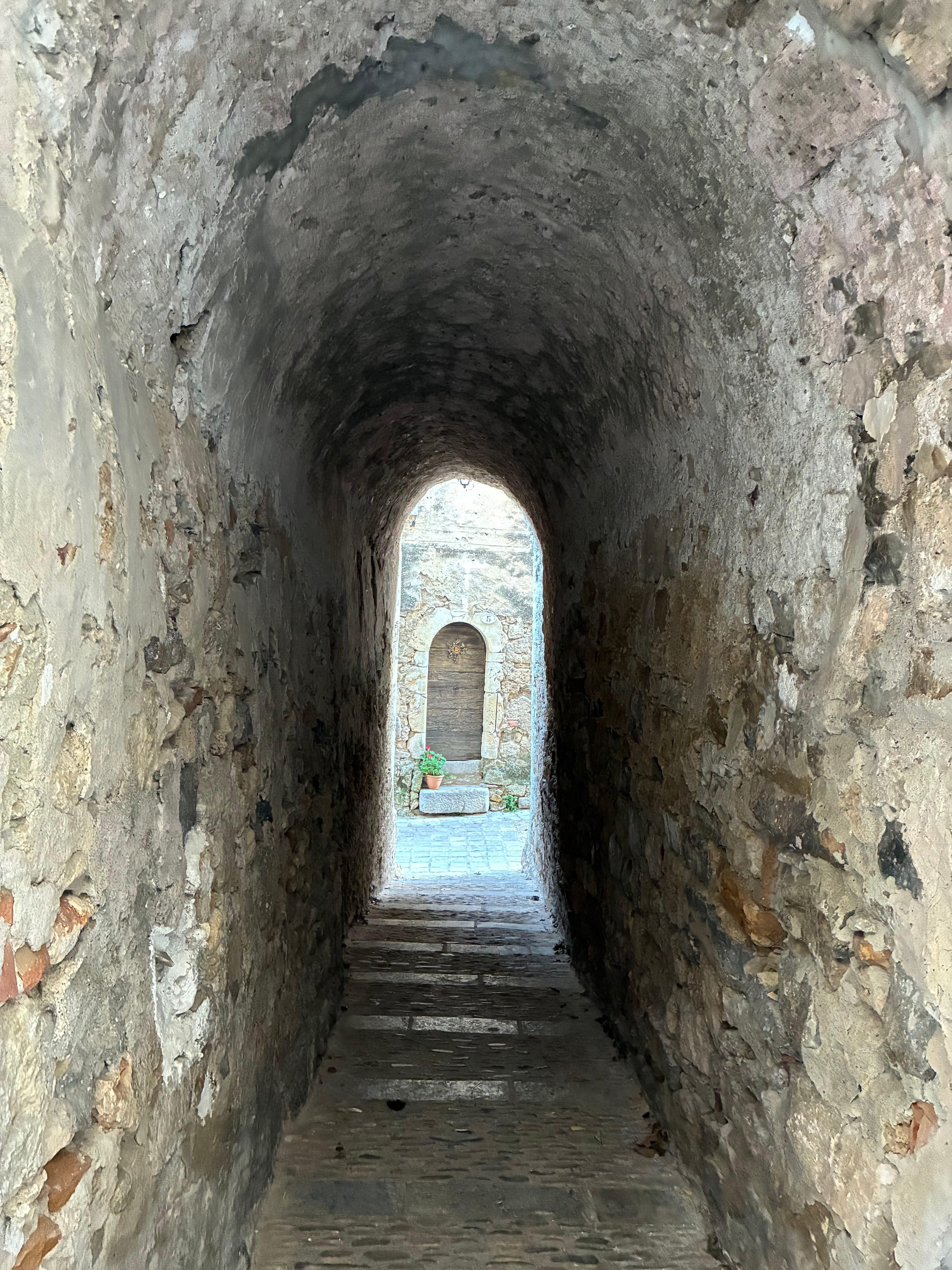
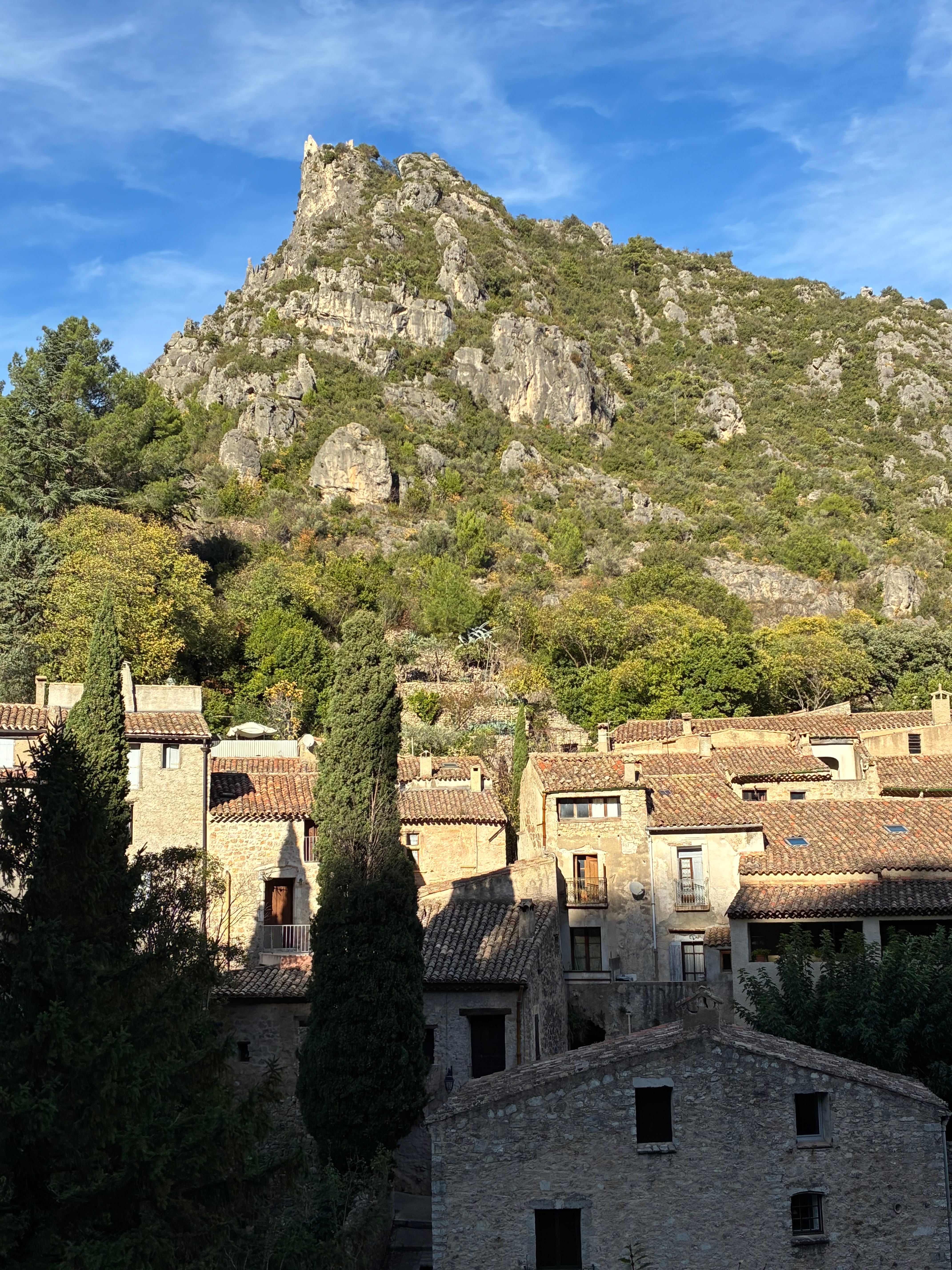
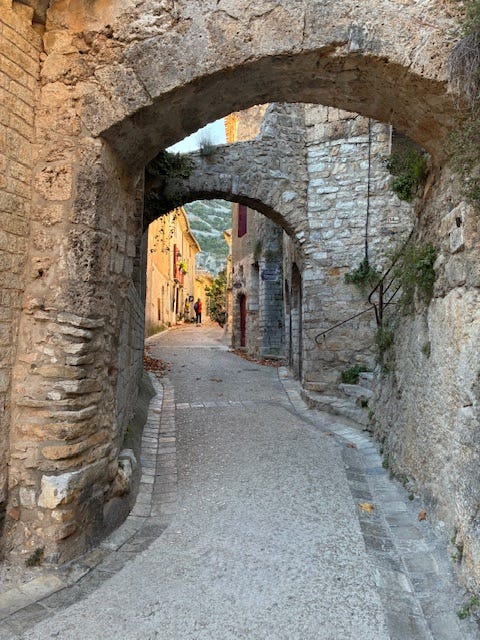
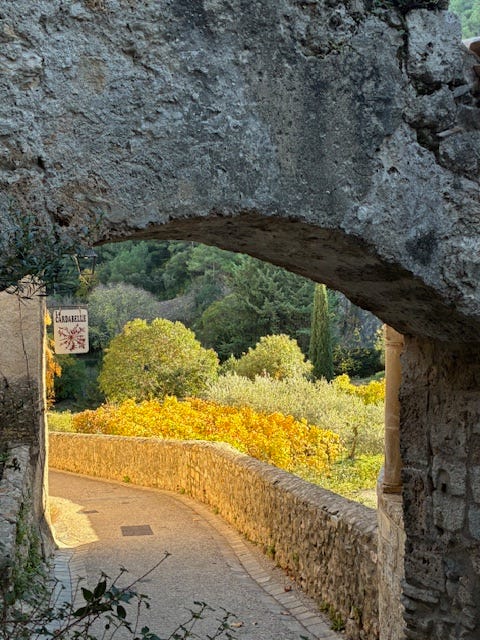
Do people really live in those old medieval French villages? Yes, they do. But on this particular day, we had Sainte-Guilhem to ourselves.
Your photos and stories have been so beautiful during the entire trip. Thank you for taking us along on your delightful, intetesting, and magical journey!